Sanctuary of the Verdant Heart
Image
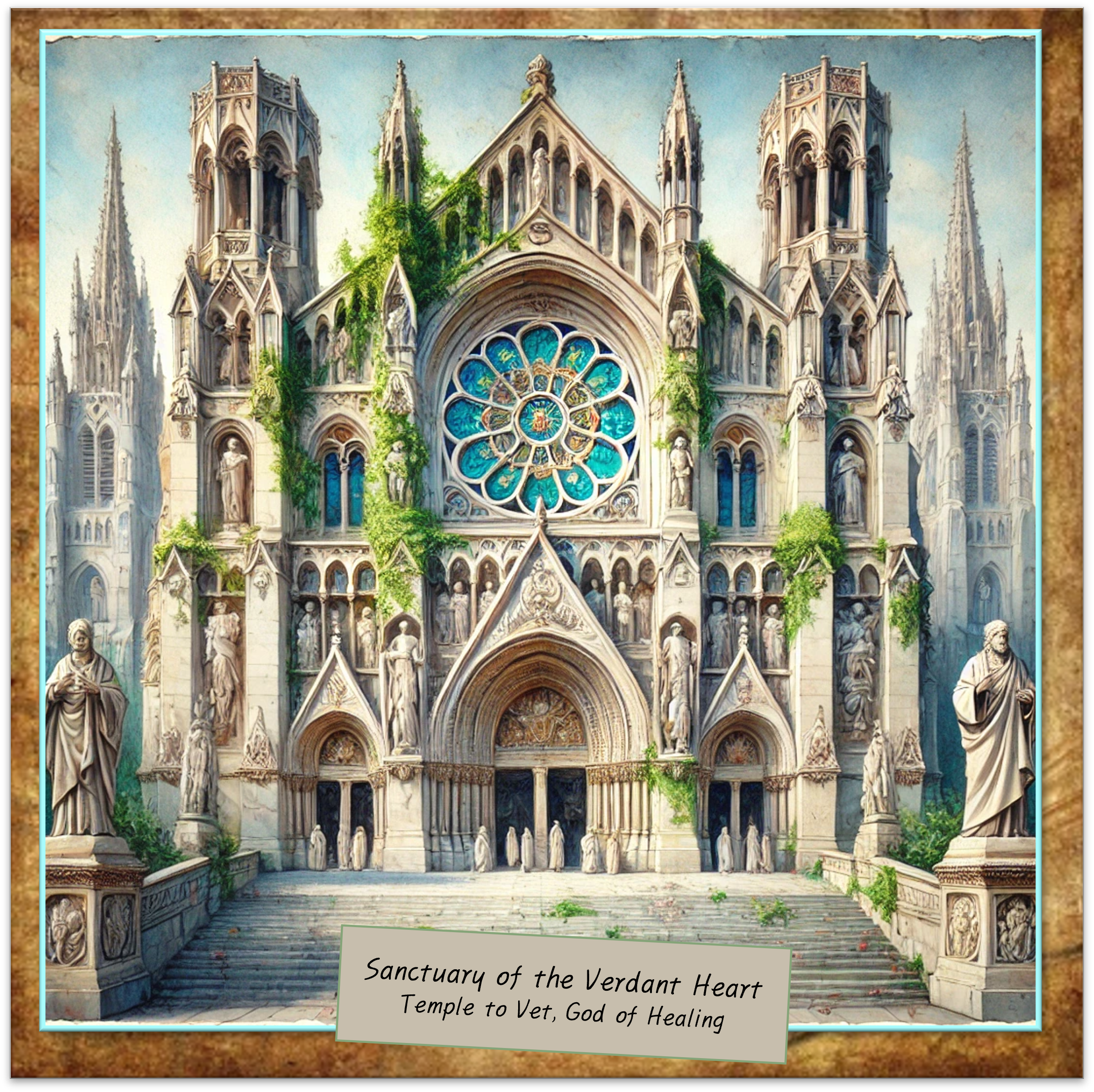
Description
The Sanctuary of the Verdant Heart is a cathedral in the city of 🏢Ezdin, on the continent of 🗺️Bordair
The exterior façade of the cathedral dedicated to the God of Life and Healing is a breathtaking display of sweeping arches, intricate stone carvings, and towering spires that reach toward the heavens. Built from pale limestone that seems to glow in the daylight, the cathedral’s walls are covered in lush ivy and flowering vines, symbolizing life and growth. Sunlight catches on the numerous stained glass windows, each depicting vibrant scenes of healing, renewal, and the god’s blessings, casting multi-coloured hues across the ground below.
The main entrance is framed by a grand archway, its surface etched with delicate patterns of intertwined vines, blossoms, and celestial symbols. Sculpted figures of monks, healers, and nurturing deities line either side of the entrance, each figure radiating a sense of calm compassion. Above the archway sits a massive relief of the god himself, with arms outstretched in a gesture of welcome and mercy, as if inviting all to seek solace within.
Tall spires rise from the corners of the façade, each one adorned with stone-carved flora and fauna, reflecting the cathedral’s dedication to life in all its forms. Between these spires, smaller terraces and balconies are visible, where monks and visitors once gathered to reflect and meditate, now empty but still emanating a sense of serene reverence.
Beneath the spires, a row of arched windows stretches across the upper portion of the façade. Each window is filled with intricate stained glass portraying legendary acts of healing and compassion, a reminder of the god’s endless mercy. Near the centre of the facade, a massive circular window, often called the “Eye of Mercy,” dominates. This rose window radiates with colours of green, blue, and gold, designed to resemble a blooming flower, symbolizing the god’s power to renew and restore.
In times past, the steps leading up to the entrance were always covered in flower petals, placed there by the faithful in reverence. Now, however, the petals are faded and trampled, and the entrance bears the scars of recent conflict. Yet, even amidst the signs of battle, the cathedral’s façade stands as a testament to the enduring power of life and the hope of healing, a beacon of peace in a war-torn city.
Notes
- Our heroes travelled to the sanctuary during 📖Book 3 - The Lead Zeppelin in order to find the secret hanger of the Lead Zeppelin ship
- The priesthood of the sanctuary was butchered by the 8th Legionius Ignis ("Legion of Fire")