
Cin'Dar Legionius Aurelius
Overview
The Cin'Dar Legionius Aurelius is the national army of the Republic of Cin'Dar. It is one of the largest standing armies in 🗺️Sordane, and is used by the ⚖️Cin'Dar Senate to project power across the globe.
Pugnus Rei Publicae ("Fist of the Republic")
As sworn each initiate of the Legionius Aurelius.
I stand with my Legion.
My shield is their shield.
My sword is their sword.
No enemy shall surpass us.
We shall never falter.
My strength serves the Legion.
Our blood belongs to Cin'Dar.
We are the will of the people.
We are the Pugnus Rei Publicae
Activities
The Legionius Aurelius serves as the primary political power in the republic, it is through the capability for violence that the legions provide that the great houses of the republic wield power, both with and outside the boarders of the republic.
The Legionius Aurelius is used for several crucial roles within the republic, including:
- The defence of the realm - some 25% of the force remains within the borders of 🗺️Cin'Dar, allocated to defensive operations.
- Territorial expansion - the legions have been used for millennia to expand the boarders of the republic across the globe
- Maintaining order - while city guard and other municipal agencies enforce the law, ultimately the legions create the stability that is the foundation of the republic. They suppress rebellions, quell uprisings, and enforced the senate's authority.
- Economic activities -the legions are often called on to build infrastructure (roads, bridges, and aqueducts) and protect trade expeditions; in addition the vast resources required to maintain the legions represent a significant portion of the economy of the republic, creating employment, opportunity and fortune.
- Diplomacy and alliances - many of the alliances and treaties of the republic are backed by the threat or promise of military support.
- Culture - the great honour of serving in the legions forms a cornerstone of the social fabric of the republic. Respect, accolades and wealth go hand in hand with the hardships of being a legionnaire.
The broad disposition of the Aurelius is:
- 25% are typically in Ezdin, protecting the capital
- 25% have are stationed within Cin’Dar, protecting her cities and towns
- 50% are on campaign and/or are outside of Cin’Dar
- 80% are fully commissioned and battle ready
- 20% are undergoing training, resupply or other activity and are not battle ready
Society
Organisational Structure
The Legionius Aurelius is commanded overall by the Prime Marshall. The Prime Marshall is always the Legatus of the First Legion. In 3898 PR that is Prime Marshal Maxiumus Ironthorne.
The Legionius Aurelius has, by historical tradition, been represented in the ⚖️Cin'Dar Senate by 👑House Aquilis, and in 3898 PR is represented by Decimus Crispus Cornelius Aquilis.
Unlike the Legionius Nauticus, which maintains a degree of political independence, the Legionius Aurelius is tightly connected with the politics of the senate. House Aquilis as patron of the Legionius Aurelius, takes a direct day-to-day responsibility over the army, and is more influential than other senators in shaping military policy. However each legion has political ties to one or more of the great houses, and often undertakes operations at the behest of their individual loyalties. In principle the legions receive their overall direction by military policy set by the combined will of the Senate.
The Legionius Aurelius has approximately 125,000 legionnaires allocated to its 23 legions, including:
- Officers (1600)
- Soldiers (115,000)
- Ancillary staff (5000), logistics, medical, engineering, tacticians, instructors, etc
- Administrative staff (2000)
The broad organisational structure is:
- Legion: A legion is the largest unit in the army, typically consisting of 4,800 to 6,000 soldiers. Each legion has a distinct style and speciality in warfare, from shock troops to experts in magical warfare. In 3898 PR there are 23 legions. The overall commander of a legion is the Legatus Legionis, appointed by the Prime Marshall and endorsed by the senate.
- Cohort: A cohort was a smaller unit within a legion, and it typically consisted of about 480 to 600 soldiers. Each legion usually had ten cohorts. The cohorts are numbered and named according to their rank and speciality. Cohorts are led by a Centurion Primus, equivalent to a modern day Major.
- Maniple: The cohort was further divided into maniples. A cohort was divided into three maniples, making each maniple roughly 160 to 200 soldiers strong. Each maniple could be considered the smallest battlefield unit within a legion.
- Century: The maniple was composed of two centuries, and each century had about 80 to 100 soldiers. The century was led by a centurion, who was often a non-commissioned officer responsible for discipline and leadership.
The command structure of the legions includes:
- Prime Marshall (Commander in Chief, x1), who has who has overall command of the navy, who in 3898 PR is:
- 🚹Prime Marshall Maxiumus Ironthorne, who is by definition Legatus of the 1st Legionius Primus ("The First Legion")
- Legatus Legionis (General, x23), who commands a legion (4,800 to 6,000 soldiers), including:
- Legatus Lucan Aureolus, Legatus of the 11th Legionius Exemplar ("The Exemplar Legion")
- 🚹Legatus Legionis Quintus Livianus, Legatus of the 14th Legionius Ferrum ("The Steel Legion")
- Legatus Cassian Aquilis, of House Aquilis, Legatus of the 17th Legionius Centurion ("The Centurion Legion")
- Centurion Primus (Major, x200), who commands a Cohort (480-600) soldiers.
- Centurion Primus is always a commissioned officer role, which establishes a "glass ceiling" for promotion. While a non-commissioned centurion may lead his troops with distinction, his families lack of political standing prevents him from commanding a cohort.
- Centurion (Captain, x1400), who commands either a Maniple (160-200 soldiers) or a Century (80 to 100 soldiers).
- The leadership of the legions has approximately 1400 Centurions, one for each Maniple and Century. Centurions have a generic title, but each vary in the size of their command and their position in the hierarchy of the legion.
- Centurions were either commissioned or non-commissioned officers, depending on their families level of political influence. As a result, not all Centurions are treated equally.
The Legionius Aurelius has a very close relationship with Legionius Nauticus and typically undertakes combined arms tactics
- The 9th Legionius Aetherius ("Legion of the Skies") are skilled in naval warfare, and often operate as additional ship-board marines.
- The 22nd Legionius Navarchus ("The Admiral Legion") has a particularly close logistic and military relationship, commanding the Legionius Aurelius naval force.
- The Legionius Nauticus has its own marine force, the Nauticus Aurelius, with some 25,000 troops, commanded by Navarch Secondus Decius Brutus.
- Legionius Aurelius maintains its own (much smaller) naval force, used primarily for troop transportation and logistics. Notable for fielding the enormous Triton Cloudmaster troop carriers.
Unlike the Legionius Nauticus which has its own distinct administrative body (the Nauticus Academy), the policy, administration, development, logistics and tactics of the Legionius Aurelius are distributed within each legion. This results in less centralised and less organised operation of those functions - which in turn explains why the legions operate with distinctly different disciplines and codices. Where centralisation is required, such as when managing the code of army justice, House Aquilis performs that role on behalf of the legion.
The Legionius Aurelius has a very close relationship with the Academy Primilitus who trains its captains and officers. Legatus Cassian Aquilis is the army commander at the Academy Primilitus, reporting directly to the head of the academy.
Tactical Unit Structure
While the legion, cohort, maniple, and century make up the larger unit sizes for the legions, on a more tactical level were several key organisational features.
Optio (second in command), a legionnaire appointed as second in command to the Centurion.
Tesserarius (guard commander), a legionnaire appointed as second to the Optio and often holding an administrative role (similar to quartermaster).
Decanus (chief of brothers), a non-commissioned officer placed in command of a Bellatores ("brotherhood"). A Decanus is roughly equivalent to a Sergeant.
The Bellatores is the smallest functional unit of a legion, having 8 soldiers and 2 support staff. While Bellatores are always 10 legionnaires, they vary in composition based on the codex of their legion and other factors.
A typical Bellatores includes soldiers who were similarly equipped to join the wider ranks of a Century. Where the first century might be designated as front-line spearmen for the legion, thus would the Bellatores in that century be 8 legionnaires armed with spears.
In the rare occasions when small group mixed tactics are required, an atypical Bellatores might consist of:
- 1 x Decanus, squad leader. Responsible for overall tactics, command decisions and ensuring squad cohesion. Equipped similar to the Miles Gladius, but with a notable plumed helm and rank-decorated shield. The Decanus is often a Fighter Battle Master.
- 2 x Miles Hastatus, spearman / frontline specialist. Responsible for holding lines and forming a strong defensive front. Used for holding the front rank, maintaining formation and breaking enemy charges. Equipped with heavy armour, a long spear, large shield and dagger. The Miles Hastatus is often a Fighter Battle Master.
- 2 x Miles Gladius, swordsman / close-combat specialist. Responsible for engaging and breaking enemy lines in hand-to-hand combat. Used for flanking manoeuvres, exploiting gaps in enemy formations, and rapid melee responses. Equipped with medium armour, a gladius, medium shield and several daggers. The Miles Gladius is often a Fighter Champion.
- 2 x Miles Sagittarius, archer / ranged-combat specialist. Responsible for ranged support and precision fire. Used for skirmishing, targeting key enemy personnel and providing cover fire. Equipped with light armour, ranged weapon (of various types) and a dagger. The Miles Sagittarius is often a Ranger Hunter.
- 1 x Miles Ballistarius, artillery specialist. Responsible for operating man-portable siege weapons. Used for support fire, targeting enemy fortifications and disrupting enemy formations. Equipped with light armour, specialist tools and specialised weaponry. The Miles Ballistarius is often an Artificer.
- 1 x Caupo, an auxiliary soldier responsible for the squads pack animal, supplies and cooking. The Caupo is often a Ranger or Cleric.
- 1 x Loricarius, an auxiliary soldier responsible for the squads equipment, weapons and lodgings. The Loricarius is often an Artificer.
On the battlefield, the Bellatores move with a raw, efficient power, their cohesion evident as they forge through the chaos. The Decanus’s orders are sharp and clear, guiding the formation as the Miles Hastatus present an unyielding wall of shields. As the Miles Gladius engages the enemy up close, the Miles Sagittarius maintains a steady stream of cover fire, disrupting enemy plans. In the rear the Miles Ballistarius unleashes devastating artillery to turn the tide in their favour.
Beyond other known units are:
- Miles Arcanus, an eldritch swordsman. The 18th Legionius Veneficus ("The Sorcerer Legion") and 15th Legionius Arcanum ("The Arcane Legion") are known to field legionnaires who are skilled arcane fighters.
Notable Personnel
- Prime Marshall (Commander in Chief) Claudian Aquilis [Deceased]
- First and founding Prime Marshall of the Legionius Aurelius
- Scion of 👑House Aquilis
- Commanded the legion from its inception in 650 PR to his death while on campaign in 665 PR (more than 3,000 years ago).
- Immortalised with a statue in the senate chamber within the floating halls of Artan’s Haven, alongside the statues of the founding Decimus and the first Grand Navarch (Grand Admiral) Hironimus Marcellus.
- 🚹Prime Marshall (Commander in Chief) Maxiumus Ironthorne
- Commands the entire Legionius Aurelius (125,000 legionnaires)
- Legatus of the 1st Legionius Primus ("The First Legion")
- Legatus Legionis (General) Lucan Aureolus
- Legatus of the 11th Legionius Exemplar ("The Exemplar Legion")
- 🚹Legatus Legionis (General) Quintus Livianus
- Legatus of the 14th Legionius Ferrum ("The Steel Legion")
- Well known as a ruthless warlord, with a reputation for absolute authority, ruthless tactics and a disregard of the rules and conventions of civil warfare.
- Legatus Legionis (General) Cassian Aquilis
- Legatus of the 17th Legionius Centurion ("The Centurion Legion")
- Army commander at the Academy Primilitus
- Responsible for training captains and officers.
- Scion of House Aquilis
- Legatus Legionis (General) 🚹Marcus Vestinus
- Legatus of the 18th Legionius Veneficus ("The Sorcerer Legion")
- Centurion Primus (Major) 🚹Quintis Commodus
- Centurion of the Cohors Sexta (6th Cohort) of the 18th Legionius Veneficus ("The Sorcerer Legion").
- Assigned to protect the 🏫Cin’Dar Academy Arcarnus in 🏢Ezdin during the civil war.
- Centurion Primus (Major) 🚹Cossus Leontius
- Centurion of the Cohors Octava (8th Cohort) of the 13th Legionius Custodes ("The Custodian Legion").
- Assigned to protect the 🏫Cin’Dar Academy Arcarnus in 🏢Ezdin during the civil war.
- Centurion Primus (Major) 🚹Caius Victricius
- Centurion of the Cohors Prima (1st Cohort) of the 15th Legionius Arcanum ("The Arcane Legion").
- Assigned to protect the 🏫Cin’Dar Academy Arcarnus in 🏢Ezdin during the civil war.
- Centurion Primus (Major) Licinius Crispinus
- Centurion of the 11th Legionius Exemplar ("The Exemplar Legion") cohorts which garrisoned 🏢Orhaz during the winter and spring of 3989 PR.
- Recalled to 🏢Ezdin with his cohorts in Warmsun for the 🏅Ezdin Jubilee Cup celebration.
- Centurion (Captain) 🚹Julianus Cato
- Centurion of the Cohors Septima Speculator (7th Scout Cohort) of the 11th Legionius Exemplar ("The Exemplar Legion")
- Led the East Gate Rebels from a hideout in 🏦Madame Palmyre’s Emporium in 🏢Ezdin during the civil war.
Beliefs and Culture
The Legionius Aurelius represents the heart and soul of the Republic’s land forces, an elite army rooted in discipline, honour, and a belief in the eternal glory of the Cin'Darian Republic. It draws inspiration from ancient traditions, blending arcane and technological prowess into the core of its military might. Every soldier, from the youngest recruit to the most hardened general, embodies the values of Cin'Darian excellence.
The culture and tenets of the Legionius Aurelius reflect the Republic’s ambition to conquer, stabilise, and civilize the world of Sordane:
Honour Above All
- Every legionary is bound by an unshakable code of personal and collective honour. Defeat is only acceptable if it leads to greater victory, and betrayal of the Republic is the ultimate disgrace.
- Honour guides their actions, from combat to diplomacy, always with the intent of upholding the ideals of Cin'Dar.
Unity in Strength
- The Legionius Aurelius believes that strength comes from unity. The legions operate as one, with the discipline of individual soldiers feeding into the power of the whole.
- Every legionary is responsible for the lives of those beside them. Personal ambition must always serve the greater good of the legion and the Republic.
Service to the Republic
- The Republic is seen as eternal, and its longevity is the responsibility of the Legionius Aurelius. They expand and secure the Republic’s territories with a singular vision: Cin'Dar's supremacy.
- Their motto, Pugnus Rei Publicae ("The Fist of the Republic") is the legions motto, reflecting the belief that they are not only protectors but the embodiment of Cin'Darian will across Sordane.
Mastery of the Arcane and Steel
- The Legionius Aurelius is distinguished by its balance of magical and mechanical warfare. Soldiers are trained to wield traditional weapons alongside arcane technology, with elite units combining the powers of spell craft and machinery.
- Arcane engineers, battle-mages, and alchemists are held in as much esteem as their counterparts wielding swords and shields. The fusion of these elements is seen as the path to invincibility.
Unyielding Discipline
- Legionaries follow a strict code of conduct, both on and off the battlefield. Disobedience and failure are met with severe consequences.
- Their iron discipline, taught through years of gruelling training and service, is the backbone of the army's fearsome reputation. Punishments are harsh, and rewards are great, ensuring that each soldier is forged into an unbreakable part of the war machine.
Glory Through Victory
- To serve in the Legionius Aurelius is to seek glory, both for the individual and the Republic. Victory in battle is a path to honor, land, and wealth.
- Monuments to fallen heroes are erected across Cin'Dar, and their names are immortalized in the halls of the Senate. The legions fight not only for survival but for the eternal glory of the Republic, believing that through conquest, they achieve immortality.
The Blood Oath
- Upon joining, every soldier of the Legionius Aurelius swears a blood oath to the Republic, symbolizing their willingness to die for its cause.
- This oath is performed before a sacred relic tied to the foundation of Cin'Dar, ensuring that each soldier is bound by tradition and the Republic's long history.
The Festival of Triumph
- After major victories, the legions hold a grand festival in the capital, where soldiers parade through the streets alongside spoils of war and captives.
- These festivals reaffirm the Republic's strength, and the highest honors are bestowed upon those who contributed most to the victory.
Legionary Brotherhoods
- Small groups within each legion form brotherhoods, sworn to protect one another in battle. These groups are highly respected, and membership is often passed down through generations.
- Brotherhoods share a deep bond, and their insignias are often tattooed or worn as emblems on armour.
The Forging of Blades Ceremony
- Before deployment, every legionary crafts or receives a blade, often forged by the legion’s own blacksmiths and inscribed with runes of power. This blade is treated as an extension of the legionary's soul, representing their commitment to the legion and the Republic.
- Many legionnaires blades are passed down within families, some have been in the service of the republic for centuries.
March of the Brotherhood
- Every year, the Legionius Aurelius re-enacts the first march of Cin'Dar’s original armies - from 🏢Ezdin to 🏢Sylestri.
- This march serves as both a rite of passage for new recruits and a reminder of the legions' purpose: to safeguard the Republic’s prosperity and to bring its light to the rest of Sordane.
The Legionius Aurelius carries itself with a sense of eternal duty and purpose, understanding that the survival and expansion of the Republic rest on their disciplined shoulders. They fight not only for the present but for the legacy of Cin'Dar that will last throughout the ages.
Religion
The Legionius Aurelius is a secular body, but some religious relationships, primarily operational:
- The Legionius Aurelius has the highest number of trained war-clerics (corpsman) within its ranks, totalling some 750 corpsman in active service (approximately 1 corpsman to 150 personnel).
- Like the Legionius Nauticus, the Legionius Aurelius hires its trained corpsman from House Celestia. Unlike the navy, the relationship with House Celestia is principally transactional, and managed at the discretion of individual Legatus.
- The 4th Legionius Luminis ("The Legion of Light") has its operational focus on the protection of the republics spiritual sanctuaries. The 13th Legionius Custodes ("The Custodian Legion") has its operational focus on the protection of the republics sacred artefacts. As a result both legions work closely with House Celestia, which often directs its day-to-day operations.
- Most legionnaires offer regular prayers to 🙏Estara - Goddess of War and Death, some smaller number regularly worship 🙏Vet - God of Life and Healing, and 🙏Garret - God of the Moon and the Hearth.
Appearance
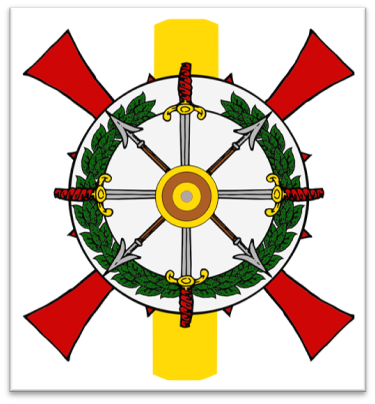
The crest of the Legionius Aurelius.
The uniform of the Legionius Aurelius is predominantly composed of earthy tones like olive green and warm browns, with highlights in deep crimson. These elements extend from both the woodland and grassland terrains native to northern 🗺️Bordair emblazoned in the blood of their enemies - for the legions know well that war is a bloody business.
Other distinct elements of the uniform are:
- Armor and tunic: The uniform combines functional armour pieces with a distinctive tunic. The armour consists of segmented plates or overlapping metal scales, crafted with advanced metallurgy techniques and embellished with intricate engravings and cogwheel motifs. The tunic, made of durable fabric in earthy tones like deep red or olive green, serves as an additional layer beneath the armour, providing comfort and flexibility.
- Helmet and crest: The soldiers wear helmets adorned with plumes or crests that symbolize their rank and unit affiliation. These helms are designed with a fusion of steampunk aesthetics and Roman influences, featuring face guards, ventilation pipes, or integrated goggles that enhance both protection and visibility on the battlefield.
- Gauntlets and greaves: The uniform includes sturdy gauntlets and greaves, crafted from reinforced metal. These pieces bear ornate designs, incorporating gears and intricate patterns. The gauntlets provide protection for the hands and forearms, while the greaves shield the lower legs. Hidden within the armour, steam-powered mechanisms enhance the strength and agility of the soldiers.
- Balteus and belts: Soldiers wear balteus, wide belts made of thick leather or intricately tooled metal, which serve as both a functional and decorative accessory. These belts hold the scabbards for their weapons and feature pouches for carrying small tools or supplies. Mechanical gears or emblems are often incorporated into the belt's design, reflecting the steampunk nature of the setting.
- Boots and spiked soles: The soldiers don boots designed for durability and stability on various terrains. The boots have retractable spiked soles, offering traction and improved footwork during combat. The boots may also incorporate concealed compartments for storing additional supplies or tools.
- Military cloak or cape: Higher-ranking officers or specialised units may don a military cloak or cape. These garments, crafted from sturdy fabrics like wool or silk, feature rich colors such as deep crimson or imperial purple. Embroidered with intricate patterns, cogwheel motifs, or heraldic emblems, the cloak or cape adds a touch of grandeur to the uniform while providing protection from the elements.
- Steampunk accessories: Steampunk elements are seamlessly integrated into the uniform. Goggles, worn atop the helmet or around the neck, serve as eye protection and may include lenses with enhanced vision capabilities. Utility belts equipped with small mechanical devices, like communication devices or mini-toolkits, further showcase the steampunk aesthetic and assist soldiers in their various tasks.
- Academy graduates: Graduates of the Academy Primilitus are entitled (and expected) to wear a distinctive braided cord aiguillette as part of your dress uniform, a gold braided cord with spike-like silver metal tips. Such devices identify the wearer as one who would “risk the (hangman's) rope of the enemy to stand in defiance and bravery for the valour of the republic” and be relied on to never surrender and never dishonour the republic even in pain of death. Further each graduate is provided with a ring upon which is the Primilitus Seal, annotated with their monogram, for the purposes of sealing orders and rulings.
Possessions
The Legions
In 3898 PR there are 23 active legions, each with their own speciality and way of making war.
| # | Name | Legatus | Speciality and Notes |
|---|---|---|---|
| 1 | Legionius Primus |
Prime Marshall Maxiumus Ironthorne |
The First Legion, known for its unmatched discipline and formidable infantry. - The Prime Marshall of all the legions is always the Legatus of the First Legion - Maintains a significant operational relationship with and is under the political control of 👑House Aquilis |
| 2 | Legionius Victorius |
The Victorious Legion, celebrated for its numerous successful campaigns. | |
| 3 | Legionius Mechanarum |
The Legion of Engineers, masters of siege warfare and machinery. - Maintains a significant operational relationship with and is under the political control of 👑House Draconus |
|
| 4 | Legionius Luminis |
The Legion of Light, guardians of the empire's spiritual sanctuaries. - Maintains a significant operational relationship with and is under the political control of 👑House Celestia |
|
| 5 | Legionius Noctis |
The Legion of Night, experts in covert operations and espionage. - Maintains a significant operational relationship with the ⚖️Gold Shields - Maintains a significant operational relationship with 👑House Octavianus |
|
| 6 | Legionius Praetoria |
Legatus Lucan Titinius |
The Praetorian Legion, protectors of the senate and the republic capital. - Notable as politically neutral, protects each of the senators without (external) bias - Maintains a significant operational relationship with the ⚖️Gold Shields - Garrisoned near the Stone Commissary within the Hagglers Court in 🗺️Ezdin - The 1st and 2nd Cohorts are domiciled within Artan’s Haven itself near the senate chambers. |
| 7 | Legionius Aquarius |
The Legion of Waters, skilled in naval warfare and riverine operations. - Maintains a significant operational relationship with and is under the political control of 👑House Marcellus |
|
| 8 | Legionius Ignis |
The Legion of Fire, known for its fearsome flamethrowers and arson tactics. | |
| 9 | Legionius Aetherius |
The Legion of the Skies, masters of aerial warfare aboard airships. - Maintains a significant operational relationship with the ⚔️Legionius Nauticus. |
|
| 10 | Legionius Gladiatus |
The Gladiator Legion, fierce combatants and entertainers in the arenas. - Maintains a significant operational relationship with and is under the political control of 👑House Drusus |
|
| 11 | Legionius Exemplar |
Legatus Lucan Aureolus |
The Exemplar Legion, esteemed for its unwavering loyalty to the republic. - Maintains a significant operational relationship with the 🏫Academy Primilitus |
| 12 | Legionius Sagittarius |
The Archer Legion, renowned marksmen and snipers. | |
| 13 | Legionius Custodes |
The Custodian Legion, tasked with guarding sacred artefacts. - Maintains a significant operational relationship with the 🏫Academy Cognitus - Maintains a significant operational relationship with and is under the political control of 👑House Celestia |
|
| 14 | Legionius Ferrum |
Legatus Quintus Livianus |
The Steel Legion, mostly cyborg infantry - renowned for their unyielding endurance, uncanny tracking skills and fierce loyalty. - Maintains a significant operational relationship with and is under the political control of 👑House Marcellus - Renowned for their successful campaigns in 🗺️Thassenzar - Attacked 👨👨👧👧our heroes at Ves's workshop in 🏢Orhaz during 📖Book 2 - The Lost Fleet |
| 15 | Legionius Arcanum |
The Arcane Legion, harnessing magic for both offence and defence. - Maintains a significant operational relationship with 👑House Aventius |
|
| 16 | Legionius Venatorum |
The Hunter Legion, expert trackers and scouts in the wilderness. - Maintains a significant operational relationship with and is under the political control of 👑House Cordius |
|
| 17 | Legionius Centurion |
Legatus Cassian Aquilis |
The Centurion Legion, distinguished by its elite officers. - Maintains a significant operational relationship with the 🏫Academy Primilitus - Maintains a significant operational relationship with and is under the political control of 👑House Aquilis |
| 18 | Legionius Veneficus |
Legatus Marcus Vestinus | The Sorcerer Legion, skilled in mystical arts and enchantments. - Maintains a significant operational relationship with and is under the political control of 👑House Aventius |
| 19 | Legionius Ferrea |
The Iron Legion, equipped with advanced steam-powered armour. - Maintains a significant operational relationship with and is under the political control of 👑House Ignatius |
|
| 20 | Legionius Ignigena |
The Firestarter Legion, specialising in scorched-earth tactics. - Renowned for their successful campaigns in 🗺️Thassenzar |
|
| 21 | Legionius Glacia |
The Glacier Legion, adept at icy terrain and cold-weather warfare. |
|
| 22 | Legionius Navarchus |
The Admiral Legion, masters of naval strategy and command. - Maintains a significant operational relationship with the ⚔️Legionius Nauticus - Maintains a significant operational relationship with the 🏫Academy Primilitus - Maintains a significant operational relationship with and is under the political control of 👑House Aquilis |
|
| 23 | Legionius Aurora |
The Dawn Legion, symbolising hope and renewal, often deployed in humanitarian efforts. | |
Known Cohorts
Each legion is made up of approximately 10 cohorts, typically 480 to 600 soldiers, each led by a Centurion Primus (Major).
As the legions have their own specialities and codices of war, the individual cohorts have similar distinction. Legions maintain common types of cohorts for capabilities such as:
- Leadership
- Often the 1st Cohort of a legion is made up of its most experienced troops and membership of the 1st is a significant honour for a legionnaire.
- Shock troops
- Mounted troops
- Artillery specialists
- Marines (both aerial and wet navy)
However each cohort has a distinct speciality, unique name, heraldry, and storied history. Indeed many cohort memberships span familial generations. Notable cohorts are:
-
The cohorts of the 13th Legionius Custodes ("The Custodian Legion")
- Cohors Octava - The Eighth Cohort
- Led by Centurion Primus (Major) Cossus Leontius
- Members of the 3rd Century were assigned to protect the 🏫Cin’Dar Academy Arcarnus in 🏢Ezdin during the civil war.
- Cohors Octava - The Eighth Cohort
-
The cohorts of the 13th Legionius Custodes ("The Arcane Legion")
- Cohors Prima - The First Cohort
- Led by Centurion Primus (Major) Caius Victricius
- Members of the 3rd Century were assigned to protect the 🏫Cin’Dar Academy Arcarnus in 🏢Ezdin during the civil war.
- Cohors Prima - The First Cohort
-
The cohorts of the 18th Legionius Veneficus ("The Sorcerer Legion")
- Cohors Tertia Anexus - The Sixth Cohort
- Led by Centurion Primus (Major) Quintis Commodus
- Members of the 3rd Century were assigned to protect the 🏫Cin’Dar Academy Arcarnus in 🏢Ezdin during the civil war.
- Cohors Tertia Anexus - The Sixth Cohort
-
The cohorts of the 14th Legionius Ferrum ("The Steel Legion")
- Cohors Tertia Anexus - The Third Cohort the Invader Cohort
- Members of the 1st Century attacked 👨👨👧👧our heroes at Ves's workshop in 🏢Orhaz during 📖Book 2 - The Lost Fleet
- Cohors Tertia Anexus - The Third Cohort the Invader Cohort
-
The cohorts of the 8th Legionius Ignis ("Legion of Fire")
- Cohors Prima Pyrastrum - The First Cohort of Torchbearers
- Cohors Secunda Incendium - The Second Cohort the Blazing Cohort
- Cohors Tertia Scintilla - The Third Cohort of Spark Catchers
- Cohors Quarta Vulcanus - The Fourth Cohort of Vulcan's Forge
- Cohors Quinta Flammeum - The Fifth Cohort of Flame Keepers
- Cohors Sexta Fornax - The Sixth Cohort of Furnace Warriors
- Cohors Septima Ardens - The Seventh Cohort the Burning Cohort
- Cohors Octava Ignifer - The Eighth Cohort of Fire Carriers
- Cohors Nona Comburo - The Nineth Cohort the Conflagration Cohort
- Cohors Decima Solis - The Tenth Cohort the Sun's Fury
-
The cohorts of the 11th Legionius Examplar ("The Exemplar Legion") are:
- Cohors Prima Virtus - The First Cohort of Valour
- Cohors Secunda Sagitta - The Second Cohort of Archers
- Commanded by Centurion Primus (Major) Licinius Crispinus
- Garrisoned in 🏢Orhaz during the winter and spring of 3989 PR.
- Recalled to 🏢Ezdin with the rest of the 11th legion in Warmsun for the 🏅Ezdin Jubilee Cup celebration.
- Cohors Tertia Scutum - The Third Cohort of Shield-Bearers
- Commanded by Centurion Primus (Major) Licinius Crispinus
- Garrisoned in 🏢Orhaz during the winter and spring of 3989 PR.
- Recalled to 🏢Ezdin with the rest of the 11th legion in Warmsun for the 🏅Ezdin Jubilee Cup celebration.
- Cohors Quarta Eques - The Fourth Cohort of Cavalry
- Cohors Quinta Ingenium - The Fifth Cohort of Engineers
- Cohors Sexta Medicus - The Sixth Cohort of Medics
- Cohors Septima Speculator - The Seventh Cohort of Scouts
- Cohors Octava Ferreus - The Eighth Cohort of Iron Will
- Cohors Nona Incendium - The Ninth Cohort of Fire-Bearers
- Cohors Decima Nocturnus - The Tenth Cohort of Night Fighters
-
The cohorts of the 16th Legionius Venatorum ("The Hunter Legion") are:
- Cohors Prima Speculatorum - The First Scouts
- Cohors Secunda Veneficus - The Second Poisoners
- Cohors Tertia Bestiarius - The Third Beast Masters
- Cohors Quarta Exploratorum - The Fourth Explorers
- Cohors Quinta Sagittariorum - The Fifth Archers
- Cohors Sexta Nocturnus - The Sixth Night Stalkers
- Cohors Septima Silvaticus - The Seventh Forest Warriors
- Garrisoned in 🏢Orhaz during the summer of 3989 PR, relieving the 3rd Cohort of the 11th Legionius Examplar
- Cohors Octava Navigatium - The Eighth Mariners
- Cohors Nona Decipulum - The Ninth Trappers
- Cohors Decima Furtivus - The Tenth Stealthy Ones
The Air Fleet
The Legionius Aurelius maintains a sizable fleet of warships, independent form the Legionius Aurelius. The air fleet totals 400 vessels and 13,000 crew.
- Approximately 200 Triton Cloudmaster troop carriers (40 crew, 4 cannon), capable of transporting up to 200 legionnaires within their mighty hulls
- 4 Geshtar dreadnaughts (250 crew, 40 cannon)
- Approximately 25 Sintel Light Cruisers (100 crew, 22 cannon)
- Approximately 50 Zephyr Light Frigates (30 crew, 14 cannon)
- Approximately 100 assorted logistics vessels (20-30 crew)
The Legionius Aurelius warships are distributed across the individual legions, noting:
- The 9th Legionius Aetherius ("Legion of the Skies"), are masters of aerial warfare aboard airships, maintains more than 50% of the fleet and operates significant airborne operations.
- The 22nd Legionius Navarchus ("The Admiral Legion") are masters of naval strategy and command, and operate most of the airborne logistics for the legions.
Constructs
The Legionius Aurelius is primarily a humanoid army, but makes significant use of constructs for both battle and logistics. Included in the legions arsenal of constructs are:
Ferrum Custos ("Iron Guardian"), heavy frontline soldier.
Towering over the battlefield, Ferrum Custos is an imposing 8-foot tall automaton encased in riveted iron plates. Its body hums with the power of steam-driven pistons, and it bears a massive rifle in one hand and a spear in the other, ready to unleash destruction at both long and close range. Ferrum Custos acts as the unyielding shield of the Bellatores, warding off enemies and ensuring that no harm comes to its squad. Its bronze eyes glow faintly, reflecting its unwavering focus and programmed loyalty.
Colossus Bellator ("Warrior Colossus"), a walking siege weapon.
The Colossus Bellator is a towering behemoth, an unstoppable golem that can weather the fiercest of battles. Its primary weapon is a massive, force-cannon capable of firing high-explosive blasts at distant targets, while its secondary weapon is the brute strength of its other arm, capable of crushing a man. The colossus is covered in iron and bronze armour plating, arcane runes etched into its armour provide it with enhanced durability, making it nearly impervious to both magical and non-magical attacks.
History
The Legionius Aurelius is nearly as old as the republic itself, and has its roots in the original armed forces:
- Myth has it that the kingdom of Cin'Dar was originally formed alongside the other nations of Bordair more than 10,000 years ago by Kan’Tahri, one the seven brothers of the Kanthu family, an ancient Aurian elf clan.
- Like all kingdoms, Cin'Dar maintained a standing army - the Uth'wai ("the brotherhood").
- Some 5,000 years after the founding of the kingdom of Cin’Dar (approx. 650 PR), the gargantuan soralide crystal, Liladan’s Heart, was discovered, refined and installed in Ezdin. Its magical power enhanced the already formidable Cin'Dar sky navy, solidifying the nations power on a global scale.
- Around this time, the Kan’Tahri monarchy was reshaped in to a plutocratic republic, forming the Cin'Dar Senate.
- The Uth'wai was renamed by the senate to the Legionius Aurelius, and reorganised in to distinct legions, some with their loyalty to one of the great houses, others more politically neutral.
- A statue of the first Legionius Aurelius Prime Marshall Claudian Aquilis stands in the senate chamber within the floating halls of Artan’s Haven, alongside the statues of the founding Decimus and the first Grand Navarch (Grand Admiral) Hironimus Marcellus
Rumours and Legends
None (yet)
Other Notes
None (yet)
Media
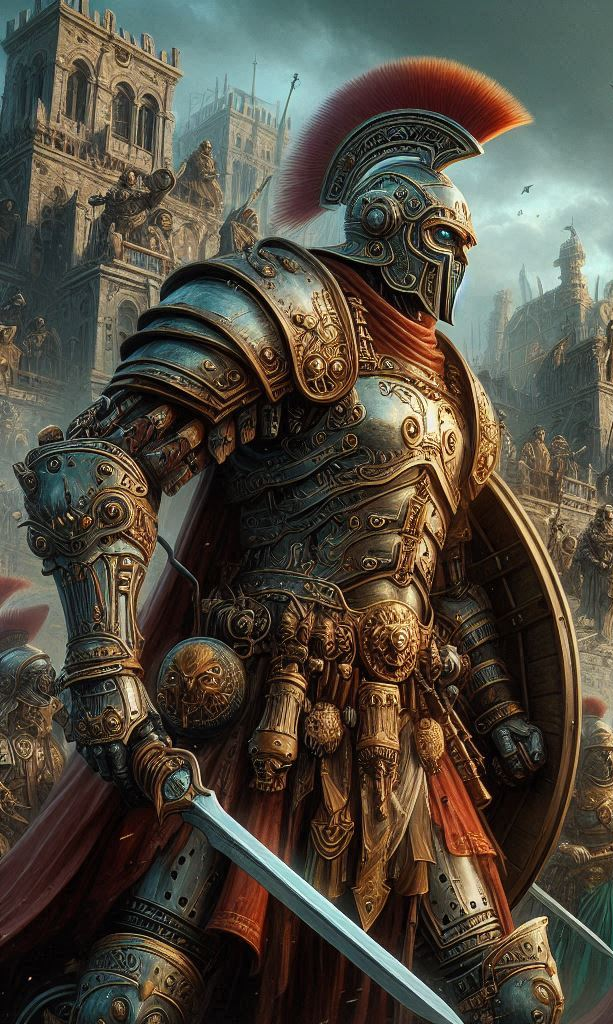
Legatus Lucan Aureolus, commander of the 11th Legionius Exemplar ("The Exemplar Legion"), defending the towers of Ezdin.
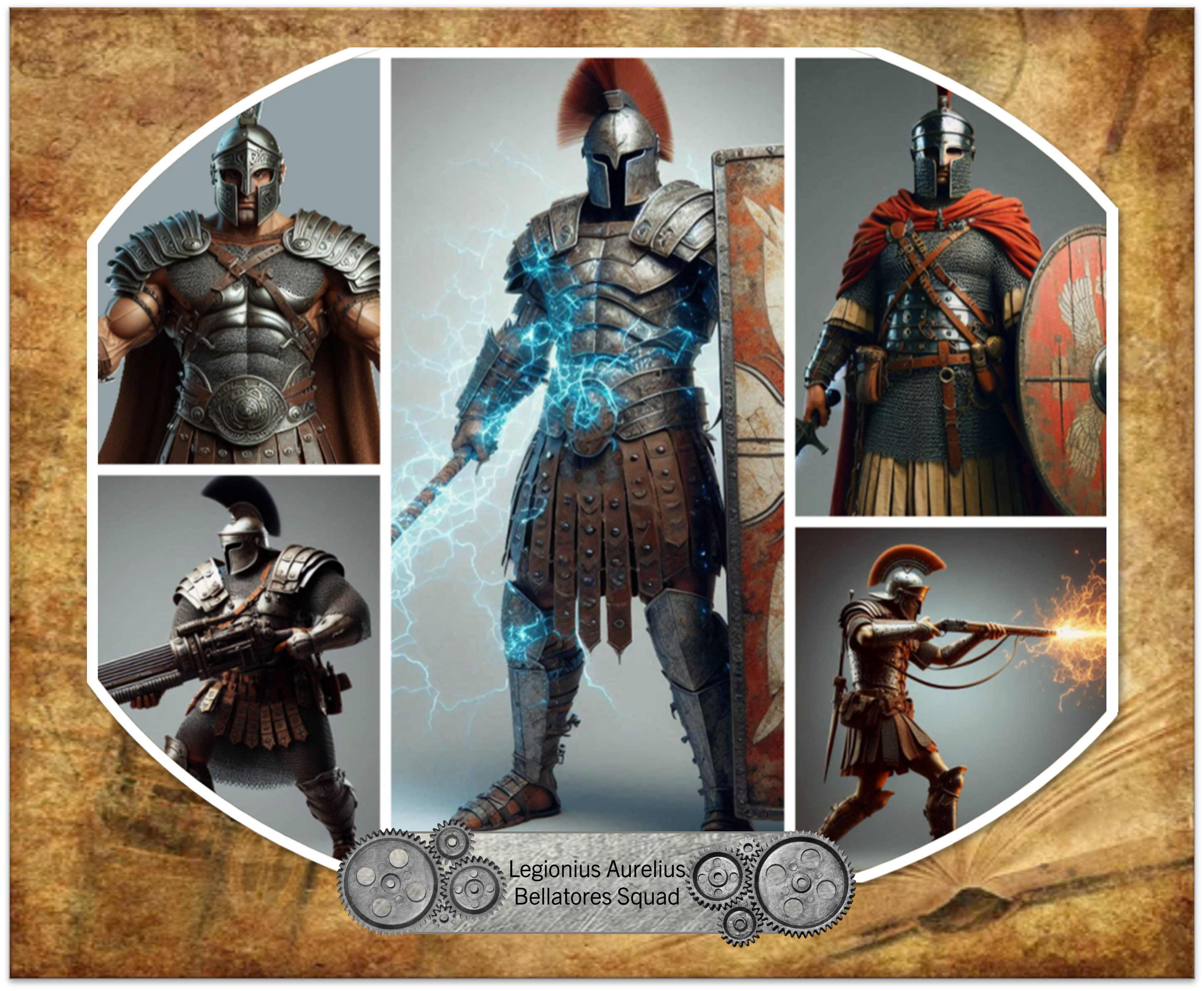
A mixed Bellatores, squad of legionnaires ready to defend.
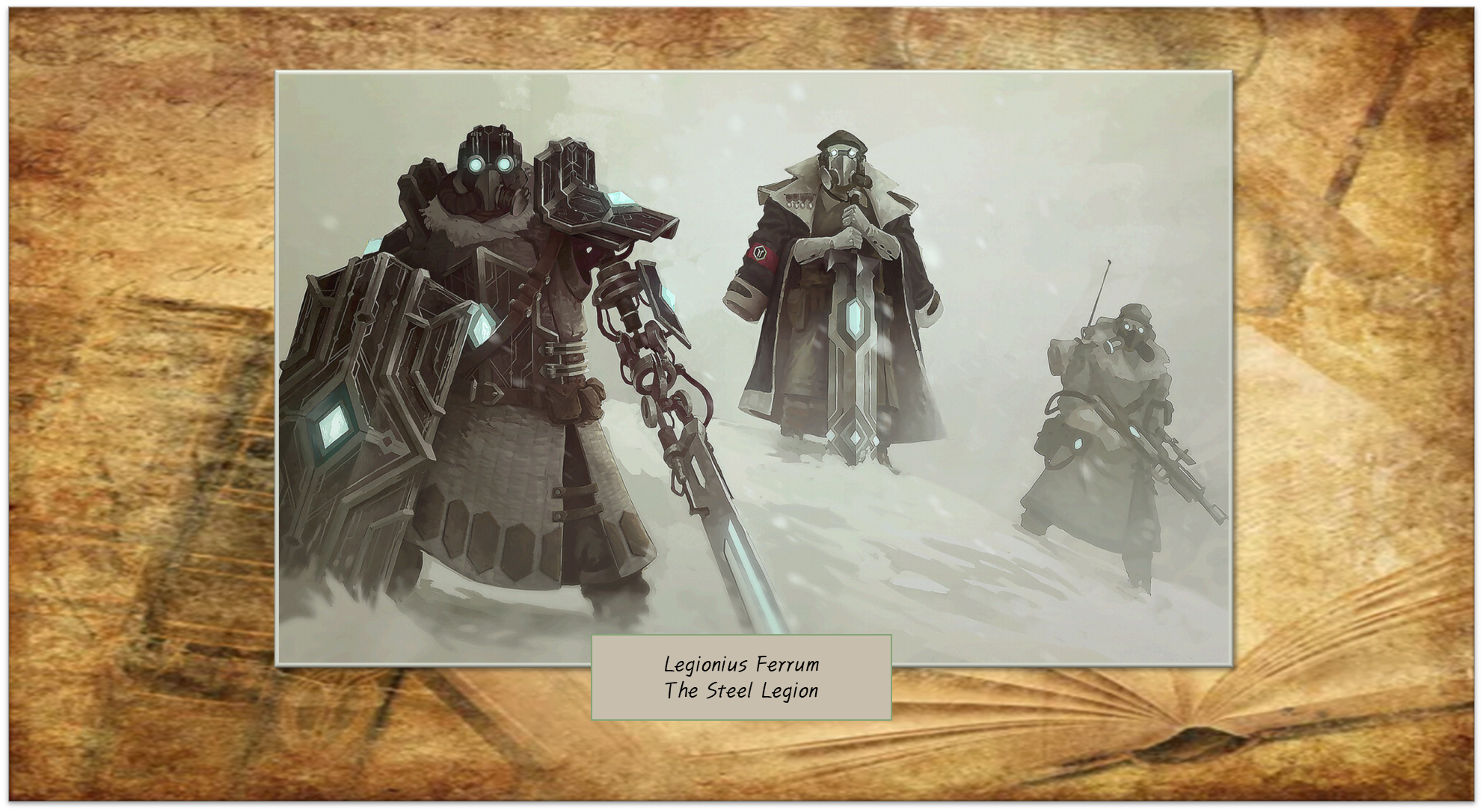
The Steel Legion, members of the 14th Legionius Ferrum on patrol in the mountains of Lozandar.
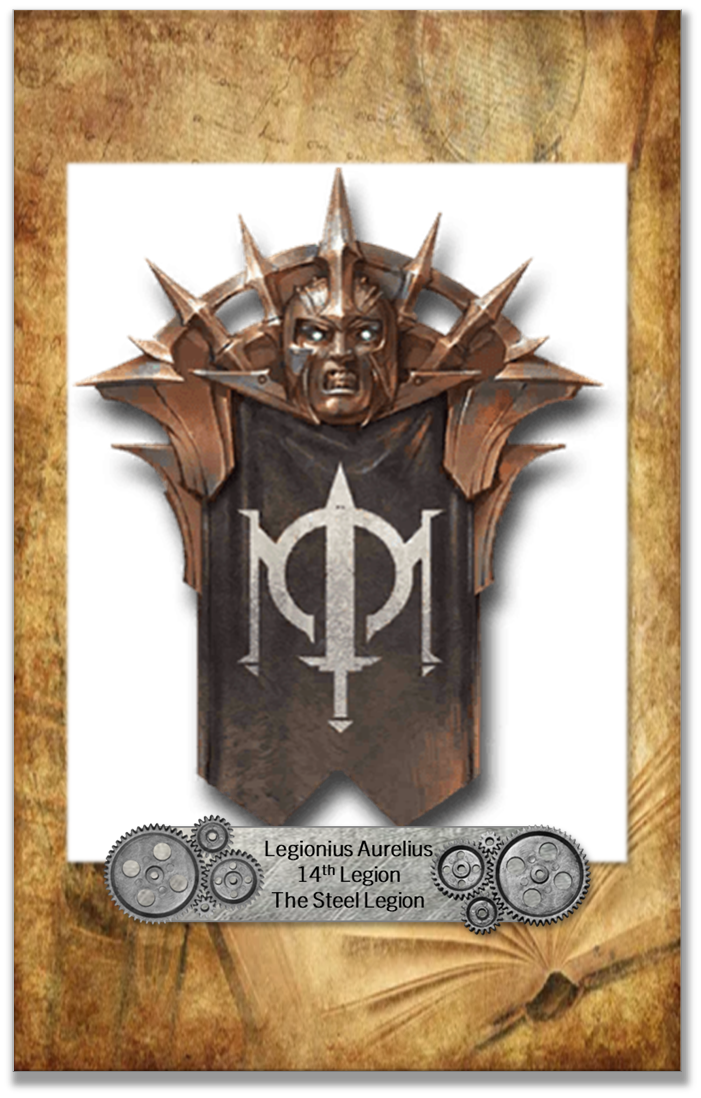
Banner of the Steel Legion
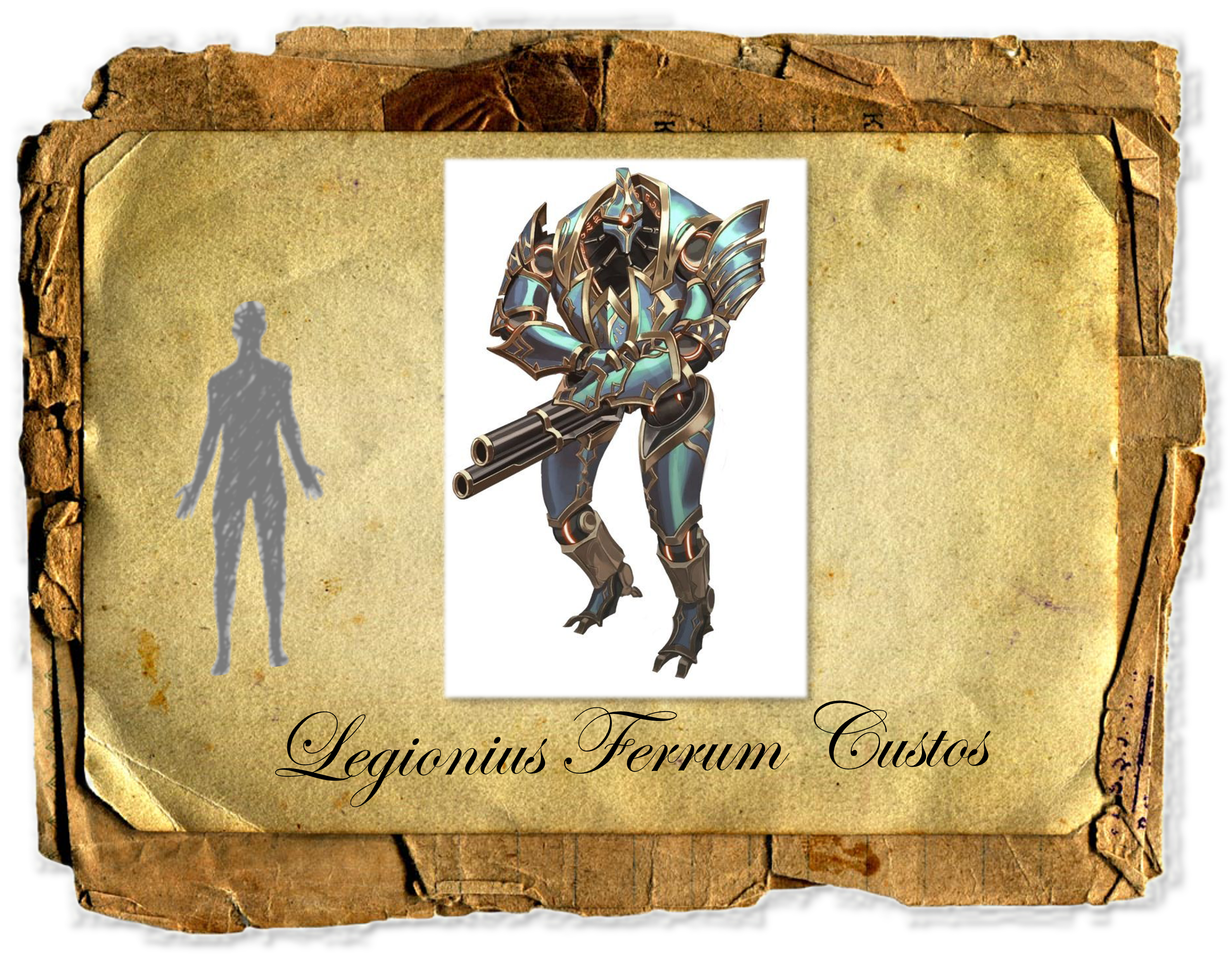
Legionius Ferrum Custos, an "Iron Guardian" legion construct
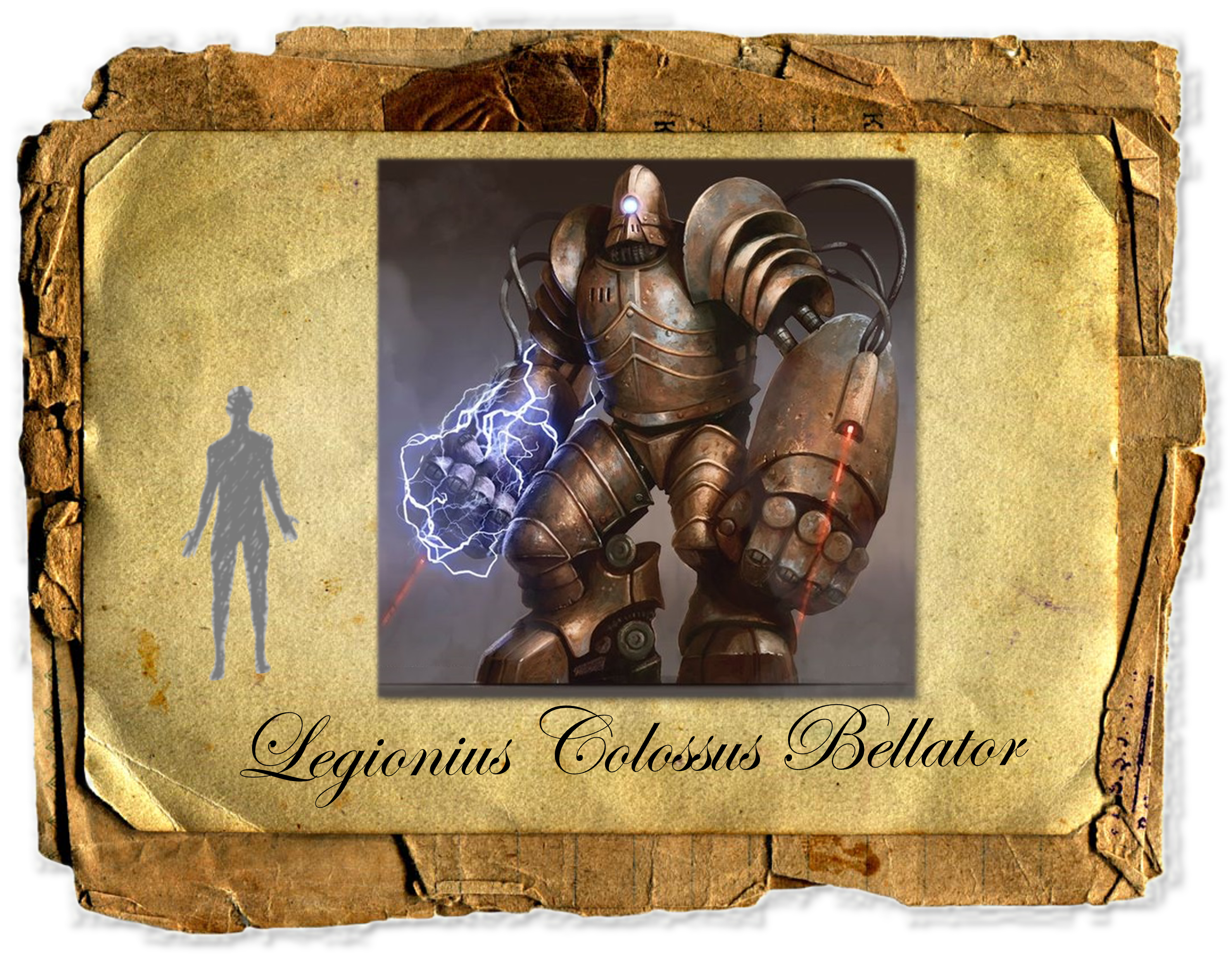
Legionius Colossus Bellator, a "Warrior Colossus" legion construct